Knitwear Collection

Jupiter
Menswear FW19/20
Inspired by Jupiter's atmospheric structure, this collection explores how planetary observation can be translated into knitwear through historical menswear, engineered construction, and material experimentation.

Can a planet be translated into knitwear?
Astronomy has long inspired fashion through prints, graphics and celestial motifs. However, these approaches often remain two-dimensional representations of space.
This project asked a different question:
Can the physical characteristics of Jupiter be expressed through knitted structures instead of printed imagery?
By studying the planet's cloud formations, atmospheric layers, storms and composition, the research explored how knitting technology could recreate depth, movement and texture directly within the fabric itself.
Research
Planet Jupiter
Rather than using Jupiter as a visual motif, I studied the planet as a physical system. Scientific observations from NASA's Juno mission revealed an atmosphere shaped by layered cloud bands, powerful storms, hydrogen-rich gases and continuous movement. These characteristics became the conceptual foundation for the collection, informing textile structures rather than surface decoration.

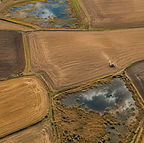
Flows West of The Great Red Spot , PJ18 (NASA,JPL-Caltech, SwRI, MSSS, Kevin M. Gill ,2019)
Eighteenth-century Menswear
To balance the organic qualities of Jupiter, I researched eighteenth-century European menswear. Garments such as the justaucorps, waistcoat and breeches introduced structured silhouettes, layered dressing and refined tailoring. These historical references provided an architectural framework that contrasts with the fluidity of Jupiter's atmosphere while reinforcing the collection's sense of authority and scale.

Menswear in 1795-1800 (Victoria & Albert Museum)
Knitting Technology
Knitting construction became the primary design language of the project. Instead of applying planetary imagery through prints, I investigated stitch structures including plain jersey, rib, purl, intarsia and stitch transfer. Their structural behaviours offered opportunities to recreate movement, depth and texture directly within the fabric, allowing the garments to communicate Jupiter through construction rather than illustration.
Design Translation Framework
This project translated scientific observations into a series of design decisions. Each planetary characteristic was analysed, abstracted and interpreted through knit structures, materials, colour, silhouette and garment construction. The resulting framework established a systematic relationship between scientific research and fashion design, allowing the collection to communicate Jupiter through material behaviour rather than visual representation.
Planetary Observation | Design Interpretation | Design Application | Image |
|---|---|---|---|
Planetary scale | Immensity translated into proportion | Long silhouettes inspired by eighteenth-century menswear | |
Mystery of Jupiter | Limited human understanding translated into silhouette | Elongated lace collar partially covering the face | |
Wind dynamics | Air movement expressed through garment motion | Different lace lengths creating movement while walking | |
Aurora (Jupiter's Crown) | Atmospheric light translated into colour | Blue jacquard development | |
Great Red Spot | Planetary focal point became visual composition | Gradient colour placement and garment layout | |
Atmospheric pressure | Physical compression expressed through fabric behaviour | Stretch knit, Lycra and rib structures | |
Metallic hydrogen | Hidden planetary core translated into material finish | Silver sprayed surfaces | |
Atmospheric movement | Continuous flow interpreted through stitch behaviour | Graduated stitch density and directional stitch placement | |
Storm systems | Rotational movement expressed through structural knitting | Tailored stitch development and knitted lace | |
Belts & Zones | Horizontal atmospheric bands became garment details | Lace structures, linear colour arrangement and panel divisions | |
Cloud layers | Layered atmosphere translated into knitted surface depth | Layered stitch structures and colour blocking |
Design Development

First Draft

Draft for the Outfit I

Draft for the Outfit I Justacorps

Draft for the Outfit II

Draft for the Outfit III
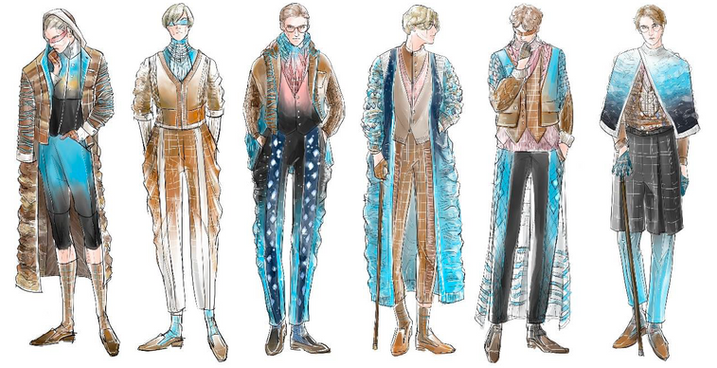
Second Draft

Final
Stitch Development
Versions
Stitch JP01


Yarn:NM 2/48 merino wool, 1 End60sx60s Lycra, 2 Ends
Stitch: Back stitches of the ottoman transferred to the front after a cycle
Yarn: NM 2/48 merino wool, 2 Ends
Stitch: 1. Back stitches of the ottoman transferred to the front after a cycle 2. Partial knit in rectangle shape was inserted inside the ottoman

Yarn: NM 2/48 merino wool, 2 Ends
Stitch: 1. Back stitches of the ottoman transferred to the front after a cycle 2. Partial knit in triangle shape was inserted inside the ottoman
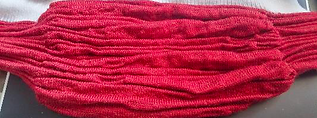
Yarn: NM 2/48 merino wool, 2 Ends
Stitch: 1. Partial knit in triangle shape was inserted inside the ottoman 2. Patterned back stitches were added in the partial knitting part (front stitch)

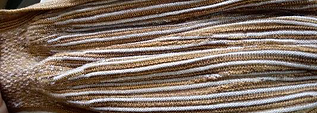
Yarn: NM 2/60 merino wool, 2 Ends 60sx60s Lycra, 2 Ends
Stitch: 1. Partial knit in different sizes of triangle shape were inserted 2. Patterned back stitches were added in the partial knitting part (front stitch)
Yarn: NM 2/60 merino wool, 2 Ends 60sx60s Lycra, 2 Ends
Stitch: 1. Partial knit in different sizes of triangle shape were inserted 2. Patterned back stitches were added in the partial knitting part (front stitch) 3. A yarn for decoration was inserted after a cycle of partial-links construction


Pattern draft for the JP01
Pattern draft for the JP01
Stitch JP12
Variant of JP01

Versions
Stitch JP04


Yarn: NM 2/48 merino, 2 Ends
Stitch: 1. Ottoman in one colour 2.Single jersey with two tensions in different regions

Yarn: NM 2/48 merino wool, 2 Ends
Stitch: 1. Ottoman in three colours 2. Single jersey with three tensions in different regions

Yarn: NM 2/56 merino wool, 2 Ends NM 2/48 merino wool, 2 Ends
Stitch: 1. Ottoman in three colours 2. Single jersey with three tensions in different regions 3. Half-gauge structure and drop stitch were applied in different regions

Structure Divisions

Tension Divisions
Versions
Stitch JP05


Yarn: NM 2/48 merino wool, 1 End 60sx60s Lycra, 2 Ends
Machine and Gauge: CMS 822, 12GG

Yarn: NM 2/56 merino wool x2
Machine and Gauge: CMS 530, 12GG
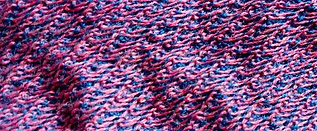

Yarn: NM 2/48 merino wool, 1 End
Machine and Gauge: ADF, 15GG
Stitch: 1. Upper part: Plating technique
2. Lower part: Simulated stitches by float jacquard technique
Yarn: NM 2/48 merino wool, 2 Ends
Machine and Gauge: ADF, 15GG
Stitch: Simulated stitches by float jacquard technique

Yarn: NM 2/60 merino wool, 1 End (black) NM 2/27 Cashmere, 1 End (black and white)
Machine and Gauge: ADF, 15GG
Stitch: 1. Perfect plating technique 2. Intarsia


JP04 Stitch Move
Setting for ADF Plating
Versions
Stitch JP09


Yarn: NM 2/48 merino wool, 2 Ends
Machine and Gauge: CMS 822, 12GG
Stitch: Stitch moves

Yarn: NM 2/48 merino wool, 2 Ends
Machine and Gauge: CMS 822, 12GG
Stitch: 1. Stitch moves 2. Intarsia

Yarn: NM 2/48 merino wool, 1 End
Machine and Gauge: ADF, 15GG
Stitch: 1. Stitch moves 2. Intarsia 3. Purl 4.Plating

Stitch Move and Intasia


Technical View
Versions
Stitch JP10


Yarn: NM 2/48 merino wool,1 End
Machine and Gauge: CMS 530, 12GG
Stitch: 1. Birds-eye Jacquard 2. Stripe pattern with 4 yarns

Yarn: NM 2/48 merino wool, 1 End
Machine and Gauge: CMS 530, 12GG
Stitch: 1. Birds-eye Jacquard 2. tripe pattern with 4 yarns in shorter width

Yarn: NM 2/48 merino wool, 1 End
Machine and Gauge: CMS 530, 12GG
Stitch: 1. Birds-eye Jacquard 2. Stripe pattern with 5 yarns
Socks: Shima Seiki SWG 021 N2 WHOLEGARMENT knitting machine

Mock Socks

Jacquard Pattern and Yarn Carriers’ divisions for knitting Socks

Yarn-in and out method
Stitches


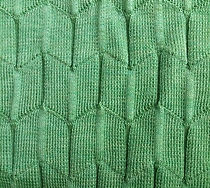


JP01
JP02
JP03
JP04
JP05
JP06
JP07
JP08
JP10
JP11
JP12
JP13
JP14
JP15

JP09
Garment Development


Outfit I


Outfit II


Outfit III


Outfit IV


Outfit V


Outfit VI
Lineup


Editorials
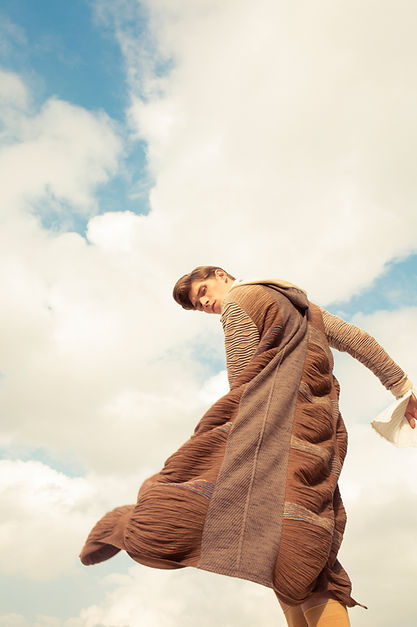
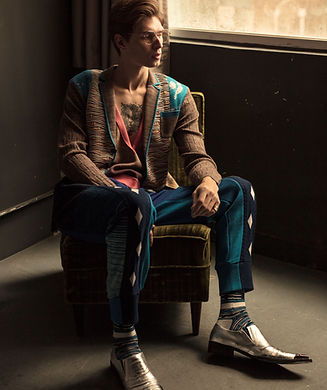
Photographer: Morgan Hung





Shows and Publications


JUPITER marked the beginning of my research-led design practice. Although the project was completed as my undergraduate final collection, it established a design methodology that continues to shape my work today.
Looking back, I realise this project was never simply about representing a planet. It was an exploration of how scientific observation could be translated into textile structures, garment construction and material behaviour.
This way of working later evolved through my master's research in textile science and continues to influence my current practice in sustainable fashion, material innovation and circular design.