
Protective Gloves for Alberta Oil Rig Workers
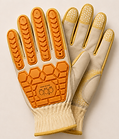
A research-driven concept exploring material selection, textile structures, and ergonomic design for hand protection in hazardous environments.
Oil rig workers are exposed to a wide range of mechanical and chemical hazards during daily operations, making hand protection an essential part of their personal protective equipment (PPE). Existing protective gloves often require trade-offs between protection, comfort, flexibility, and grip.
This project explores the design of a protective glove concept for Alberta oil rig workers through literature review, material research, and product design. The project investigates workplace hazards, evaluates protective glove materials and relevant testing standards, and develops a glove concept that considers protection, comfort, and functionality for demanding working environments.
The Challenge
Oil rig workers perform physically demanding tasks while working around heavy machinery, sharp tools, crude oil, drilling fluids, and other hazardous substances. Hand injuries are among the most common workplace injuries in the oil and gas industry, requiring protective gloves that can provide reliable protection without significantly reducing comfort or dexterity.
However, designing protective gloves involves balancing multiple requirements. Increasing protection often results in thicker and heavier gloves, which may reduce grip strength, flexibility, and tactile sensitivity. Long working hours also introduce additional challenges such as heat build-up, perspiration, and material degradation after prolonged exposure to oil and chemicals.
This project began by investigating these workplace challenges to identify the functional requirements of protective gloves before developing a design concept.
Why Hand Protection?
Hand injuries are among the most frequently reported injuries in Canada's oil and gas industry. To better understand the need for protective gloves, I reviewed incident data and occupational health literature related to oil rig operations.
Potential Hand Hazards in Alberta Oil Rig Operations
Mechanical
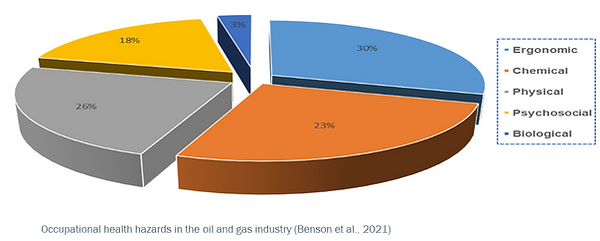
Mechanical (30%) and chemical hazards (23%) account for a significant proportion of workplace injuries.
Caused by:
-
inadequate and improper PPE
-
inattention or lack of focus
-
inappropriate machine operations
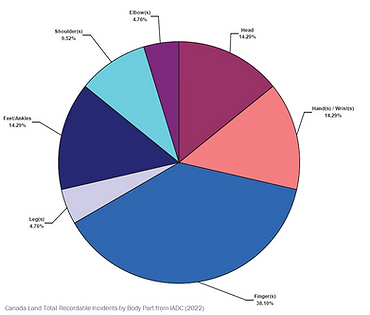
More than half of reported mechanical injuries involve the fingers (38.1%) and hands (14.29%).
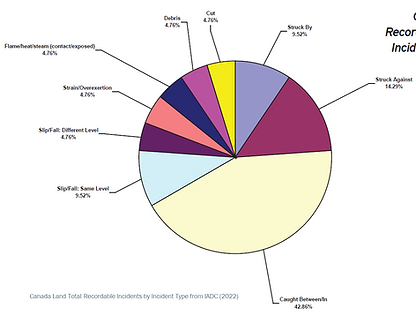
Cuts (4.76%) and impacts (42.86%) are among the leading causes of hand injuries.
Gloves need to be cut-resistant and impact-resistant from being cut & crushed by machines and tools
Chemical
Skin irritation: Drilling fluids/mud, crude oil, machining oils, & refined fuels
Skin corrosion: Highly concentrated sodium hydroxides in drilling fluids/mud
Dermatitis: Emulsifiers in drilling fluids/mud & crude oil
Degreasing: Crude oil, drilling fluids/mud
Chemical burn: Bromides added to the drilling fluids/mud
All these chemicals can be easily found at the oil rig station.
Need to load at least 60 °C: associated hazard: heat
Drilling fluids
Waxy crude oil with high paraffin & Crude oils in different chemical contents & texture
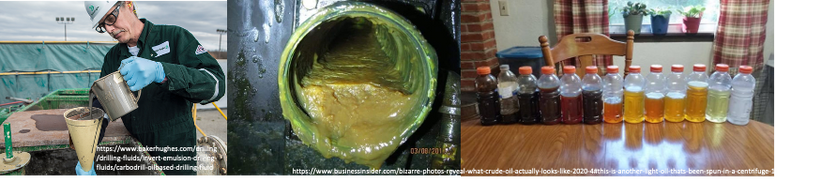
Gloves need to be Chemical Permeation Resistance from being contaminated by fluid chemicals
Ergonomic and Physiological Challenges
Injuries caused by loss of grip strength
Decrease hand contraction speed, maximal hand grip strength, and sensitivity of the hand and fingers
Glove’s thickness: losing up to 50% of grip strength
Affect the range of hand and finger motion, tactile sensitivity, and bring ergonomic discomfort
Low temperature: losing up to 9% of grip strength
In Alberta’s winter: cold stress, that loss of fingers and hand feeling and dexterity
Sweat-caused dermatitis
Thermal insulation properties of the thick glove
Skin conditions and sensorial discomfort
-
Miliaria, Skin irritation, and itch in atopic dermatitis
-
Allergy
-
Breeding ground for bacteria and fungus
-
Reduce the skin's defensive ability
Gloves need to be Breathable with moisture control, thermal insulation, flexibility, and good grip-ability to avoid discomfort and incidents caused by the gloves
6 Design Objectives
Based on the hazard assessment, the following functional objectives were established to guide the glove design.
Cut Resistance
Moisture Management
Impact Resistance
Thermal Insulation
Chemical Resistance
Dexterity & Grip
These objectives translated workplace hazards into measurable product requirements.
Performance specifications and standards of protective gloves for related hazards
In the current protective gloves market:
Cut resistance: ANSI/ISEA 105 & EN388
Impact resistance: ANSI/ISEA 138 & EN388
Chemical permeability: not specified by the existing products
ANSI/ISEA 105
ANSI/ISEA 105-2016
American National Standard For Hand Protection Classification
ANSI/ISEA 138-2019
American National Standard For Performance And Classification For Impact-Resistant Gloves
EN388
European safety standard for protective gloves against mechanical risks

Material Evaluation
Based on the identified hazards, design objectives, and required performance standards, candidate materials were evaluated according to their protective performance, durability, comfort, flexibility, and suitability for oil rig working environments.
Materials | Cut Resistant | Impact resistant | Thermal insulation | Oil & fluid resistant | Moisture control | Breathability | Grip-ability | Heat resistant | High tensile strength |
|---|---|---|---|---|---|---|---|---|---|
Kevlar ® thread
| V | V | V | ||||||
Silicone Rubber | V | V | V | V | |||||
TPR (Thermoplastic Rubber) | V | V | V | ||||||
Full-grain Goatskin Leather
| V | V | V | V | |||||
LTP (Low-temperature Plasma ) Treated Merino Wool | V | V | V | V | |||||
3M™ Thinsulate™ Featherless Insulation | V | V | |||||||
UHMWPE (Ultra-high-molecular-weight polyethylene
) | V | V | V |
Gloves Design
Final Material System
Glove Component | Selected Material | Primary Function |
|---|---|---|
Stitching | Kevlar® thread | High seam strength and durability under demanding working conditions. |
Grip reinforcement | Silicone rubber | Improves grip performance when handling oily tools and equipment. |
Back of hand | TPR protectors | Impact protection while maintaining flexibility. |
Palm and shell | Full-grain Goatskin Leather | Oil resistance, abrasion resistance, durability, and grip. |
Thermal lining | LTP-treated Merino Wool + 3M™ Thinsulate™ Featherless Insulation | Thermal insulation, moisture management, and wearer comfort. |
Cut-resistant liner | UHMWPE knit | Provides cut resistance while maintaining flexibility. |
Instead of maximising the performance of a single material, the glove integrates multiple materials with complementary properties. This layered approach balances cut resistance, impact protection, chemical resistance, thermal comfort, moisture management, flexibility, and grip performance while minimising unnecessary weight and bulk.
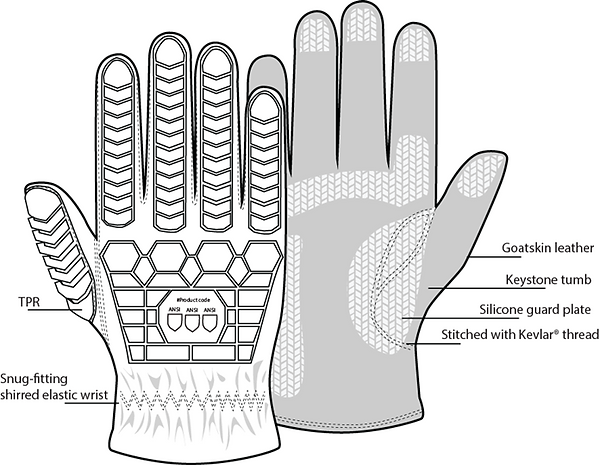
Overview of the gloves
Protective Structure and Design Features
Outer Layer: Back of the Hand
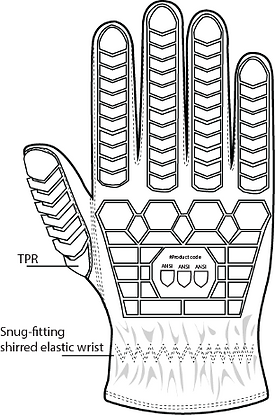

Impact resistance: Thermoplastic Rubber (TPR)
Liquid Permeation resistance: Goatskin leather coated with nanoparticulate films
Size to fit: Zig-zag stitched shirred wrist by Kevlar ® thread with an inserted elastic band to fit the various wrist sizes
Colour of Alert & Visibility: Neon colour TPR
Outer Layer: Palm
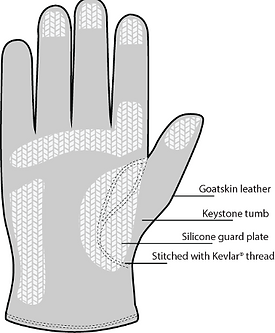
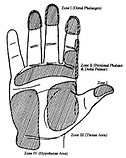
Grip-ability: Silicone guard plates with depth applied with the tire pattern

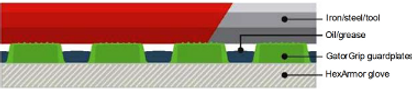
Placed on four zones: the gripping force distribution on the palm, reduce the bulkiness and the effect on joint motivation
Inner Layer
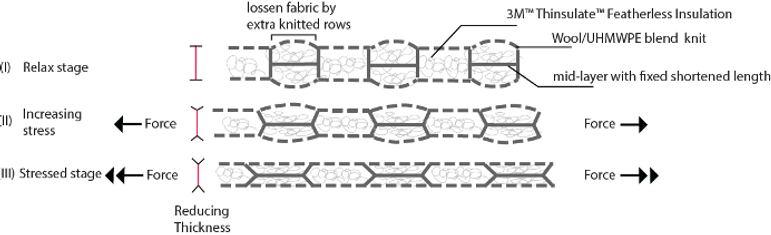

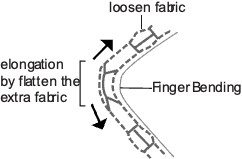
Flexibility & Structure support: 3D knit structure with compressible thickness: max 1.4cm
Uniform performance: Limit the insulation fibre move away from the original region: an even distribution
Construction
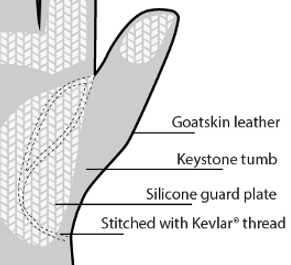
Flexibility: Thumb: stitched separately as a keystone design
Fluid penetration resistance: Seam-sealing tape is placed on the seams
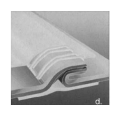

Double-fold hem: tuck in the raw edges: avoid loose fibres trapped into the machines and leading to Incidents
Proposed Performance Testing



Cut resistance: ANSI 105
(ASTM F2992-15, ASTM F1790-15 & ISO 11393-4)
Impact resistance: ANSI 138
Chemical permeability: ASTM F739
Testing standards that target to our listed hazards
Additional tests that existed in the products but would be the least prioritised:
Blunt puncture: EN388 and ANSI/ISEA 105
Abrasion: EN388
Tear: EN388
Manufacturing Process
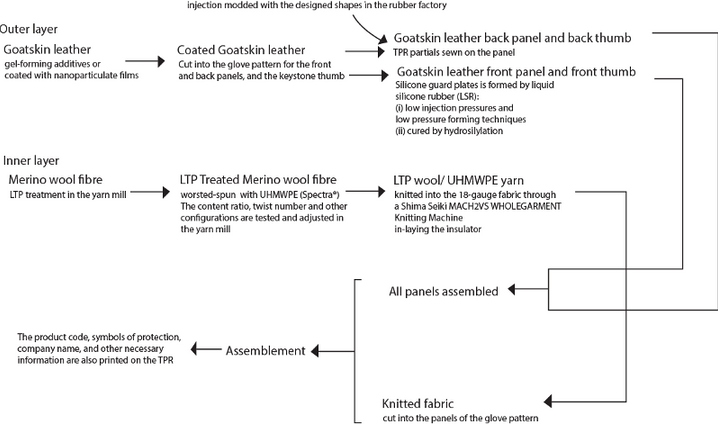
Leather factory /
Gloves manufacturer
Yarn mill
Knitting factory/ Gloves manufacturer
or core spun?
Limitations and Future Development
As a research-driven design concept, the proposed glove system has not yet been prototyped or experimentally validated. The following limitations identify the key areas requiring further development before production and field application.
Key Limitations
-
The performance of the proposed inner-layer knitted structure has not been experimentally validated.
-
The project focuses on selected mechanical, chemical, thermal, and ergonomic hazards; other oil rig hazards, including debris, electrical shock, and flame exposure, are outside the current scope.
-
The assembled glove system has not been evaluated through prototype or field testing.
-
Production costs and manufacturing feasibility require further assessment.
Future Development
Future development should focus on prototyping and validating the complete glove system through material, construction, and wearer-performance testing. Proposed evaluation areas include breaking force and elongation of the inner knitted structure, liquid penetration at outer-layer seams, moisture management of the assembled glove, and additional mechanical performance requirements based on market and field needs.
This page presents a simplified overview of the project, highlighting the key research, material selection, and design development process. Looking back on this project, it remains an interesting exploration of how textile knowledge and material research can translate into protective product design.
The original project includes further technical details and supporting research that are not fully presented here.
If you have ideas, questions, or anything you would like to discuss about the project, feel free to reach out. I would be happy to exchange thoughts and hear different perspectives.